

Fresno State’s Commuter Students Seek Connection, Support and Change
Commuting to college can feel like a roadblock to belonging, especially at California State University, Fresno. Over 95% of undergraduates live off campus and face challenges managing long drives, parking struggles, and a sense of disconnection.
Chris Angel, a student who commutes from Mendota, said “Most of the time, I just want to get home, and I keep missing out on different events.”
Are changes on the horizon for these commuter Bulldogs?
Data from the Office of Institutional Effectiveness, which collects information about Fresno State, shows that 83% of first-year undergraduate students and 95% of all undergraduates enrolled in Fall 2022 lived off campus or commuted.
The 2014 California State University, Fresno Active Transportation Plan gathered data on the residencies of off-campus students and the extent of their commutes within a 50-mile radius of the campus. The plan included a circular graph that illustrates the distribution of Fresno State's student population (represented by red dots) between Tulare and Merced, California.
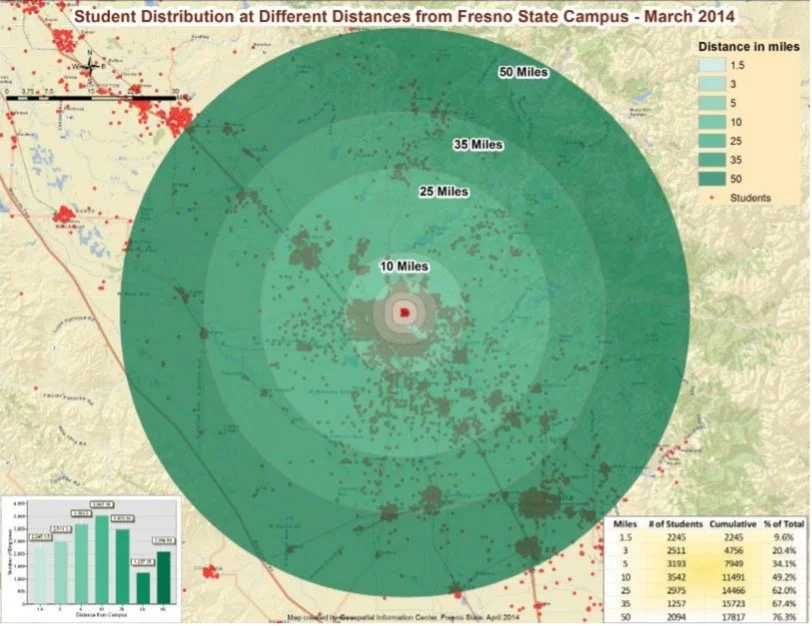
Student Residential Distribution within 50 Miles of Campus in 2014 [Credit: California State University, Fresno]
Approximately 50% of Fresno State students (~11,500) in March 2014 lived within 10 miles of campus. Still, another 30% (~6,350) were spread across the remaining 40 miles, with many more not counted in the graph of Student Residential Distribution. This can be noted through the unreported red dots spread further than the 50-mile radius.
It’s hard to imagine that things have changed much in the past 10 years, especially with emerging information. When asked about their transportation to school and on campus, challenges they face and potential solutions, Fresno State students’ responses support there have been no changes.
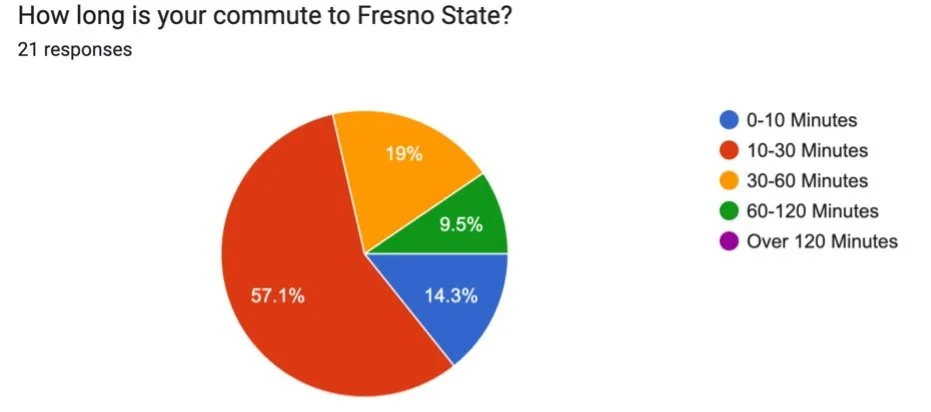
There were 57% of respondents who commuted to campus within 10 to 30 minutes, followed by 29% who commuted 30 to 120 minutes. These findings would align with the graph of the 2014 Transportation Plan that indicated a comparable number of students traveling within a 10-mile radius, which allows for a commute of up to 30 minutes.
The same goes for the number of students traveling from a distance of 50 miles or more which would take up to 120 minutes.
In addition to discussing their travel to campus, students asserted the three main challenges commuters face and three key changes they believe Fresno State could implement to promote greater integration into the Bulldog Community for commuters.
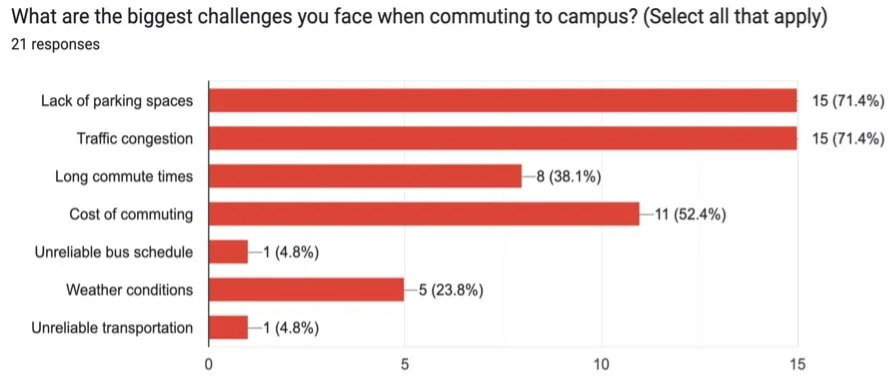
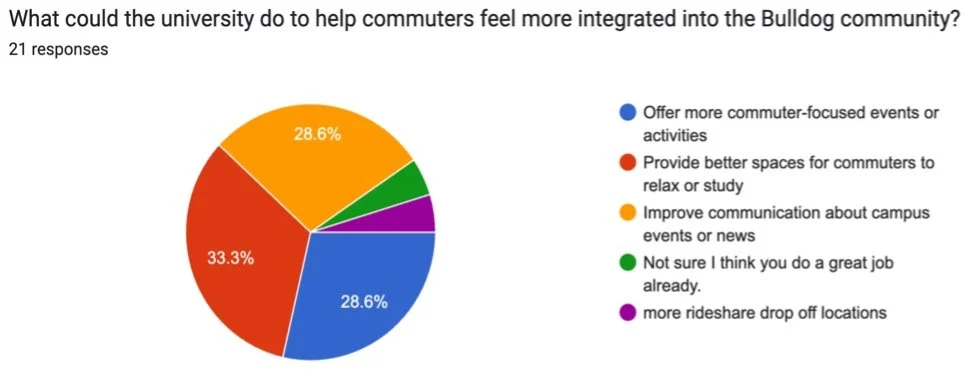
Here are some potential solutions for Fresno State that address the challenges and needs of commuter students:
Partner with local transit agencies to offer relief in commuting costs financially or by providing discounted or free transit passes.
Develop more infrastructure where off-campus students can relax or study between classes.
Encourage flexible scheduling and remote learning options to spread out commuting times and reduce peak-hour traffic.
Increase awareness of campus community activities and programs that support commuters.
The insights gathered from the surveys underscore the need for increased resources, improved transportation options, and enhanced community engagement initiatives. By implementing the suggested solutions, Fresno State cannot only alleviate the financial and logistical burdens of commuting but also strengthen the sense of belonging among all students.
Additional student responses support these proposals for reducing commuters' stress, such as:
48% voted it is somewhat expensive to commute, and 43% voted it’s very expensive.
52% voted for the university to reduce parking fees or implement free parking.
67% voted for the university to provide hybrid or online learning options.
52% believed commuting sometimes affects their participation in campus events and activities depending on the time of the event, and 29% voted commuting certainly makes it harder.
The survey results revealed the shared financial challenges and mental stress that commuters experience.
Gerardo Dicocea, a junior at Fresno State, commutes from Visalia, which is about 50 miles south of Fresno. His views about his daily drive reflect the statistical evidence of the struggles associated with commuting.
“The attendance is mandatory, and that makes it a little harder for people who commute because some days it gets pretty tough,” Dicocea calculated that commuting Monday through Friday without missing would cost $2,000 monthly, “So, it’s a lot.”
Itxaxo Zendejas, another Junior student, spoke of not feeling integrated into the Bulldog community as a commuter, resembling the survey findings.
“I’m taking all these classes, especially in music, but at the same time having to commute an hour a day, it feels very disconnected,” Zendejas said. He mentioned that he has many responsibilities outside of school, stating, “I can’t really connect as much as I wanted to.”
Addressing the challenges faced by commuter students at Fresno State is essential for fostering a more inclusive and supportive campus environment.
Efforts are being made to enhance the sense of belonging on campus, particularly for commuter students through the Off-Campus Student Life (OCSL) Program. Evita Soares serves as the coordinator, assisted by Jasmeen Manger, a pre-med student from Fresno State.
Both Soares and Manger are familiar with the challenges of commuting, drawing from their experiences as students at Fresno State.
Soares relocated to Reedley from Turlock and commuted while earning a bachelor’s degree in social work and a master’s in student affairs. She initially served as a graduate assistant for OCSL while Jerry Gomez was the coordinator. Soares took over as the OCSL coordinator in November.
“Our main goal is very much to create, like a sense of community and belonging with our students through all these resources because it's hard,” Soares said, reflecting on her experience as a commuter student who lacked support from people or programs. She realized that initiatives like OSCL are essential for helping students graduate and successfully integrate into the educational system.
Manger, who started working with the OCSL program as a junior, had previously felt disconnected from the community while commuting from Lemoore. Getting involved with OCSL allowed her to build new connections, learn more about Fresno State, and find a reason to come to campus beyond just academics.
“It just gave me a better experience of the college life. And I'm grateful because now I have this leadership role as well,” Manger said that is how they aim to shape students’ experiences on campus.
The OCSL Program has been hosting “Night at Campus Pointe”, a widely recognized event at the beginning of each Fall semester.
The office also contributes to commuters monthly during their events “Good Morning Commuters” and “Good Evening Commuters.” They help them get a free snack, like tacos, funnel cakes, donuts and coffee, to eat before or after classes.
Soares and Manger both believe that these are the most beneficial types of support provided by the OCSL.
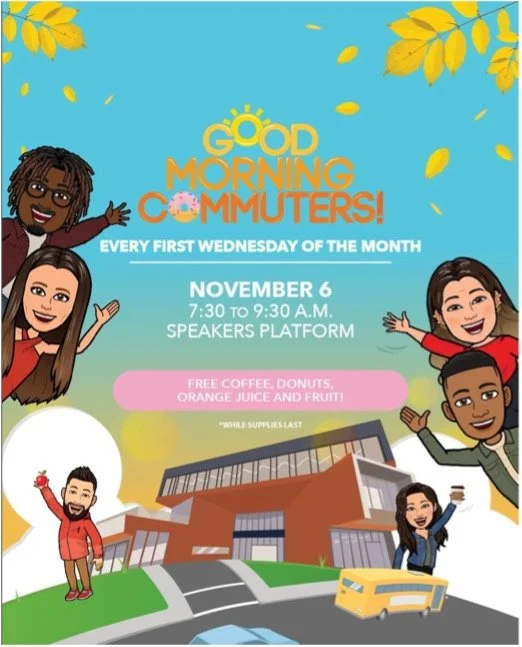
Good Morning Commuter Post [Credit: @OCSLprogram Instagram]
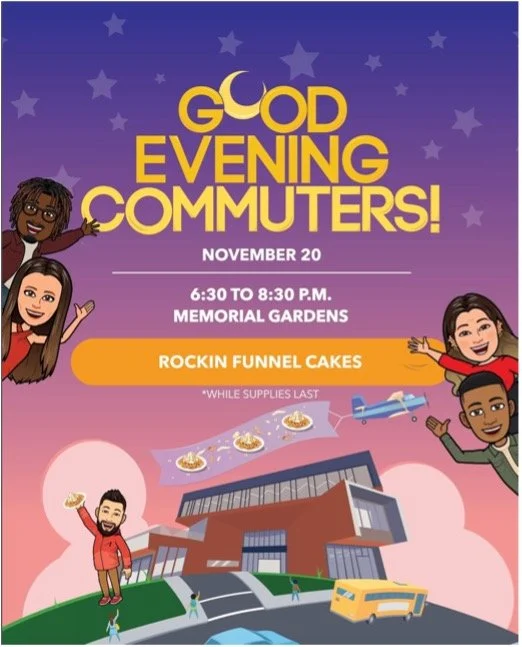
Good Evening Commuter Post [Credit: @OCSLprogram Instagram]
“I've had students being like, ‘Oh, my God, you just, like, made my day, like I hadn't eaten.’ Sadly, sometimes I've met a few students for Good Evening periods [who] are like, ‘Oh, I haven't eaten all day. This is the first thing I've eaten today,’” Soares spoke on the importance of timing their events.
OCSL has been promoting accessibility for students through collaborations with different organizations on campus and clubs to support a larger variety of commuters and cater to more needs.
OCSL is working to restore some of its previous initiatives. One of those is the locker program, which allows students to rent lockers for free to store their belongings. Additionally, they are developing a transportation website that will provide information on bus routes and Amtrak stations in Fresno County.
The Commuters Eats website, a project in development, will highlight affordable restaurants in the area that will actively engage with students.
“Because of the collaborations on campus that we do, we're able to, like, really pinpoint and target like events and specific needs,” Soares said about their efforts to enhance commuters’ overall experience.
Finally, Soares and Manger have been planning exciting new events for 2025. It entails craft workshops, cooking classes, resource guides, and productivity workshops. Students can stay updated on their Instagram: @OCSLprogram.
“Our overall goal is to make them feel more comfortable with the campus environment, have people to reach out to, create memories, and have a good overall college experience,” Manger said.
- 30 -
